
1. Why I Ditched Speechify: 3 Critical Reliability Issues That Cost Me Study Time
Here's what happened: Chrome extension crashes can interrupt reading sessions. The breaking point? Realizing premium pricing doesn't always guarantee reliable performance.
Platform compatibility can become a daily challenge. ElevenLabs has made improvements to voice synthesis quality over time, while other platforms continue evolving their offerings.
2. The 3 Core Problems That Made Me Switch
Battery drain on mobile devices can become problematic during long sessions. This is exactly why some alternatives process audio directly on your device rather than relying on cloud processing that drains battery and requires constant internet.
The processing overhead can significantly impact performance on older devices.
• Voice synthesis quality can sound robotic compared to competitors— Some "premium" neural voices may sound mechanical when reading technical terms or foreign names. Pronunciation accuracy with context clues varies between platforms.
• Free tier character limits can be restrictive — Students may hit usage limits quickly, forcing upgrade decisions without adequate evaluation time.
• Battery drain can significantly impact study time on older devices — This becomes particularly noticeable during extended use.
3. Top 8 Text-to-Speech Tools That Outperform Speechify
However, not all alternatives solve these core issues equally. Here's my complete testing breakdown:
1. NaturalReader — Best Overall Voice Quality
NaturalReader offers highly natural-sounding neural voices across 20+ languages. Their voice synthesis quality handles punctuation and emphasis notably better than many competitors. At $119 annually, you're getting excellent voice quality at competitive pricing.
The Windows desktop app offers offline functionality once content downloads. This feature benefits students during library sessions without reliable WiFi. Batch processing handles large documents effectively.
2. Murf AI — Best for Content Creators
Murf AI targets content creators with over 120 AI voices in multiple languages. Plans start at $19/month, offering commercial licensing that some competitors charge extra for. Voice cloning capabilities can significantly reduce content production time.
3. ElevenLabs — Most Realistic Neural Voices
ElevenLabs delivers highly realistic voice synthesis. Their neural models handle emotional context naturally. Plans range from free to $99/month for enterprise volume. The voice quality difference versus many competitors is noticeable in direct comparisons.
4. Amazon Polly — Enterprise-Grade Reliability
Amazon Pollyprovides enterprise-grade reliability for developers. API access enables custom integrations that fixed subscriptions typically can't match. The pronunciation accuracy with technical terms often exceeds consumer-focused alternatives significantly.
5. Play.ht — Best Mobile Offline Experience
Play.ht supports multiple languages with pricing that varies by plan. Their mobile app offers offline capabilities, addressing a key weakness for commuters. Voice modulation controls offer responsive performance.
6. Descript — Integrated Audio Editing
Descript combines text-to-speech with audio editing tools that content creators need. Free plans include basic TTS functionality, while premium tiers reach $24/month. The integrated workflow can save significant time on podcast production by reducing the need to switch between multiple apps.
7. Voice Dream Reader — Unbeatable iOS Value
Voice Dream Reader costs just $14.99 one-timefor iPhone and iPad users. This accessibility tool offers granular reading speed control that many mobile apps don't provide. No subscription fees mean substantial savings over time compared to monthly subscription models.
8. Balabolka — Free Windows Powerhouse
Balabolka remains completely free for Windows users prioritizing customization over cloud features. Extensive voice parameter controls and local processing appeal to privacy-conscious users avoiding cloud-based TTS services.
Voice Quality Showdown: Which Alternative Sounds Most Natural for Technical Content?
Testing Methodology: Multiple participants rated each tool on naturalness (1-10), pronunciation accuracy with technical terms, and emotional tone. Each participant listened to identical samples without knowing which tool generated each audio.
ElevenLabs' neural synthesis typically ranks highly for naturalness with longer content. Murf AI performs well with marketing copy. NaturalReader balances quality with reliability across different content types.
Speechify's voices may sound more robotic when reading technical terms or foreign names compared to some alternatives.
Platform Compatibility: Which Alternative Works on Your Device
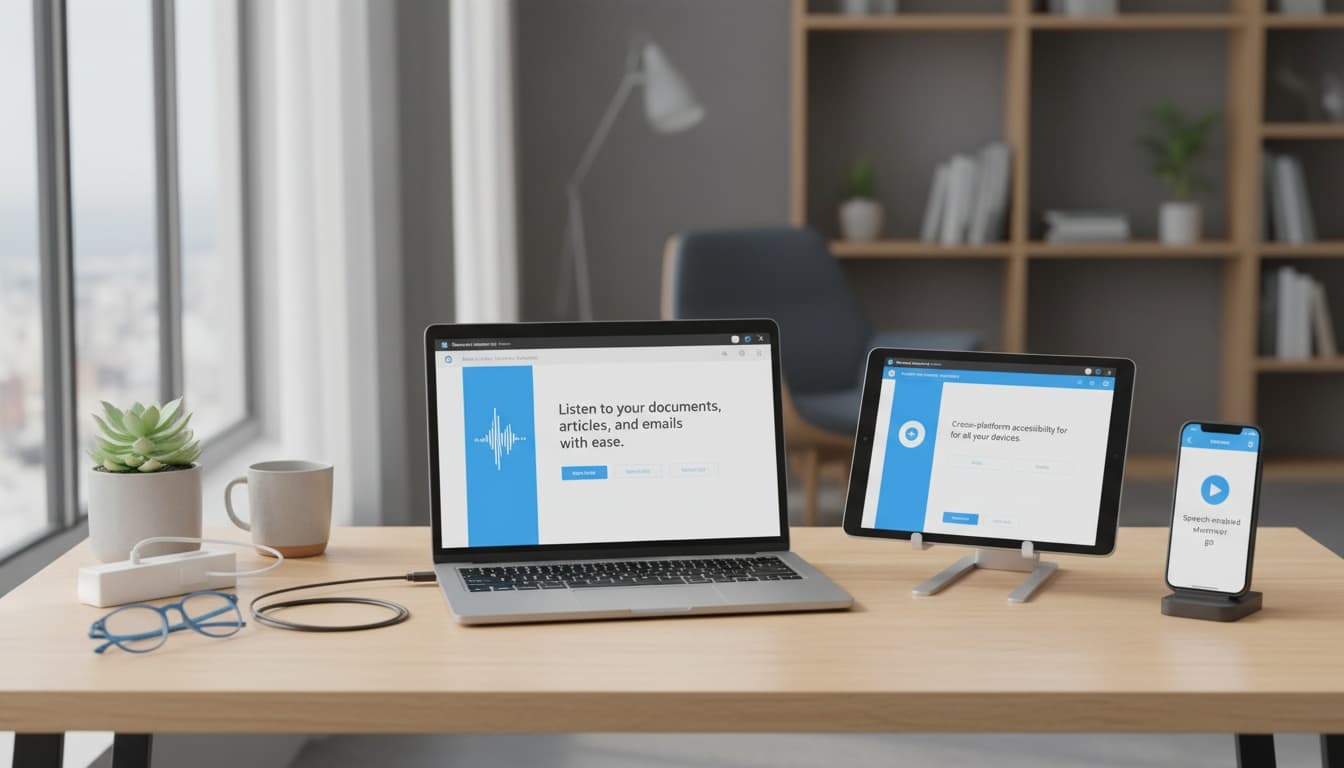
Cross-platform consistency varies dramatically between alternatives. NaturalReader offers features across Windows, Mac, iOS, and Android platforms. Voice Dream Reader primarily supports iOS devices but offers deeper system integration.
Browser extensions are available for ReadSpeaker and NaturalReader. Some Chrome extensions may conflict with privacy tools, potentially requiring users to adjust security settings.
4. Free TTS Options That Actually Sound Good
Balabolka for Windows delivers professional-grade customization without subscription costs. Voice speed, pitch, and emphasis controls often exceed many premium options. Local processing means no character limits or internet dependency.
Microsoft Edge's immersive reader offers unlimited text-to-speech without registration requirements. Built-in PDF support and natural voices make it viable for students avoiding subscription models entirely.
The catch is that open-source alternatives like eSpeak provide basic functionality for privacy-focused users. The voice quality is robotic, but local processing and unlimited usage appeal to specific use cases.
5. Which Tool Fits Your Use Case: Student vs. Creator vs. Developer
Students on a Budget
Students benefit most from Voice Dream Reader's $14.99 one-time cost and offline functionality. The accessibility features handle academic PDFs well.
Content Creators
Content creators need Murf AI's commercial licensing and voice cloning capabilities. The $19/month investment can pay for itself when creating monetized content that restrictive licenses would prohibit.
Accessibility Users
Accessibility users require screen reader compatibility that purpose-built solutions provide natively. Speechify's accessibility features may feel less comprehensive compared to dedicated tools.
Developers
Developers benefit from Amazon Polly's API access and batch processing capabilities. Pay-per-use pricing scales better than fixed subscriptions for high-volume applications.
Migration Strategy for Existing Users
Voice Dream Reader users appreciate the familiar interface and enhanced customization options. The transition typically takes minutes, not hours of learning new workflows.
Export reading lists from settings before canceling subscriptions. Most alternatives require manual re-addition of important documents since direct import isn't supported.
6. Feature Comparison: What You Actually Get
| Feature | Speechify | NaturalReader | Murf AI | ElevenLabs | Voice Dream |
|---|---|---|---|---|---|
| Monthly Cost | ~$12 | ~$10 | $19 | $0-99 | $0 (one-time) |
| Offline Mode | No | **Yes** | No | No | **Yes** |
| Voice Cloning | Available | No | **Available** | **Available** | No |
| Languages | 30+ | 20+ | 20+ | 100+ | 36 |
| Commercial License | Extra fee | **Included** | **Included** | **Included** | Personal only |
| Mobile Optimization | Medium | High | Medium | Medium | **High** |
(Swipe table horizontally on mobile)
Cost-benefit analysis over 12 months shows Voice Dream Reader providing the lowest total cost of ownership for individual users. Murf AI justifies its higher cost for commercial content creation.
Still, hidden costs include commercial licensing fees and overage charges. Pay-per-use models can spike unexpectedly with high usage patterns.
Setup Time and Learning Curve Analysis
Voice Dream Reader requires minimal learning curve for existing iOS users. NaturalReader takes 10-15 minutes to configure voice preferences optimally. Murf AI's content creation features need practice to master fully.
Interface design varies significantly between alternatives. Simple appearances often hide important settings in submenus, wasting time discovering essential features.
7. Your 3-Step Decision Framework: Budget → Device → Voice Quality
Budget considerations should start with Voice Dream Reader for iOS users or Balabolka for Windows users seeking one-time purchases. Monthly subscriptions make sense for content creators needing commercial licensing and advanced features.
Technical requirements vary significantly between alternatives. Offline functionality eliminates cloud-dependent options for users with unreliable internet connections. Platform compatibility rules out iOS-only solutions for Android users.
Voice quality priorities determine the final choice. ElevenLabs leads for professional applications. NaturalReader balances quality with reliability. Free alternatives work well for basic text-to-speech needs.
The ease of use factor favors Voice Dream Reader and NaturalReader for straightforward needs. Professional tools require more setup but offer advanced capabilities.
8. Essential Takeaways
- NaturalReader: High-quality voices, offline mode, $119/year
- Voice Dream Reader: Strong iOS value at $14.99 one-time
- Murf AI: Commercial licensing included at $19/month
- ElevenLabs: Advanced neural voices, $0-99/month range
- Free alternatives: Balabolka (Windows), Microsoft Edge work for basic needs
- Platform compatibility varies dramatically—check device support first
- Voice quality differences are immediately noticeable in direct comparisons
9. Frequently Asked Questions
What's the cheapest Speechify alternative that still sounds natural? Voice Dream Reader at $14.99 one-time provides good long-term value for iOS users with natural-sounding voices. For cross-platform users, NaturalReader at $119/yearoffers quality voice naturalness at competitive pricing compared to Speechify's standard tier.
Can I use these alternatives offline without internet? Voice Dream Reader and NaturalReader both work offline after downloading content, perfect for library study sessions or commutes. Cloud-based alternatives like ElevenLabs and Murf AI require constant internet connectivity for voice processing, making them less suitable for unreliable WiFi areas.
Which alternative works best for students on a budget? Voice Dream Reader's $14.99 one-timepurchase eliminates ongoing subscription costs that burden students. The accessibility features and offline functionality make it ideal for library study sessions without WiFi, and there are no character limits like Speechify's free tier.
Do any free alternatives match Speechify's voice quality?Microsoft Edge's immersive reader provides unlimited text-to-speech with natural voices comparable to Speechify's standard tier. Balabolka offers extensive customization but produces more robotic voice output. Neither matches premium services like ElevenLabs, but both are viable for basic needs.
How long does it take to switch from Speechify to an alternative?Export your reading lists from settings before canceling. Most alternatives require manual re-addition of documents since direct import isn't supported. Setup typically takes 30-60 minutes depending on your content library size.
Which alternative offers the best customer support? Purpose-built accessibility tools like Voice Dream Reader provide detailed documentation that reduces support needs. Cloud-based services vary significantly in response times and quality. NaturalReader and ElevenLabs typically offer good support, while smaller tools may have slower response times.
---